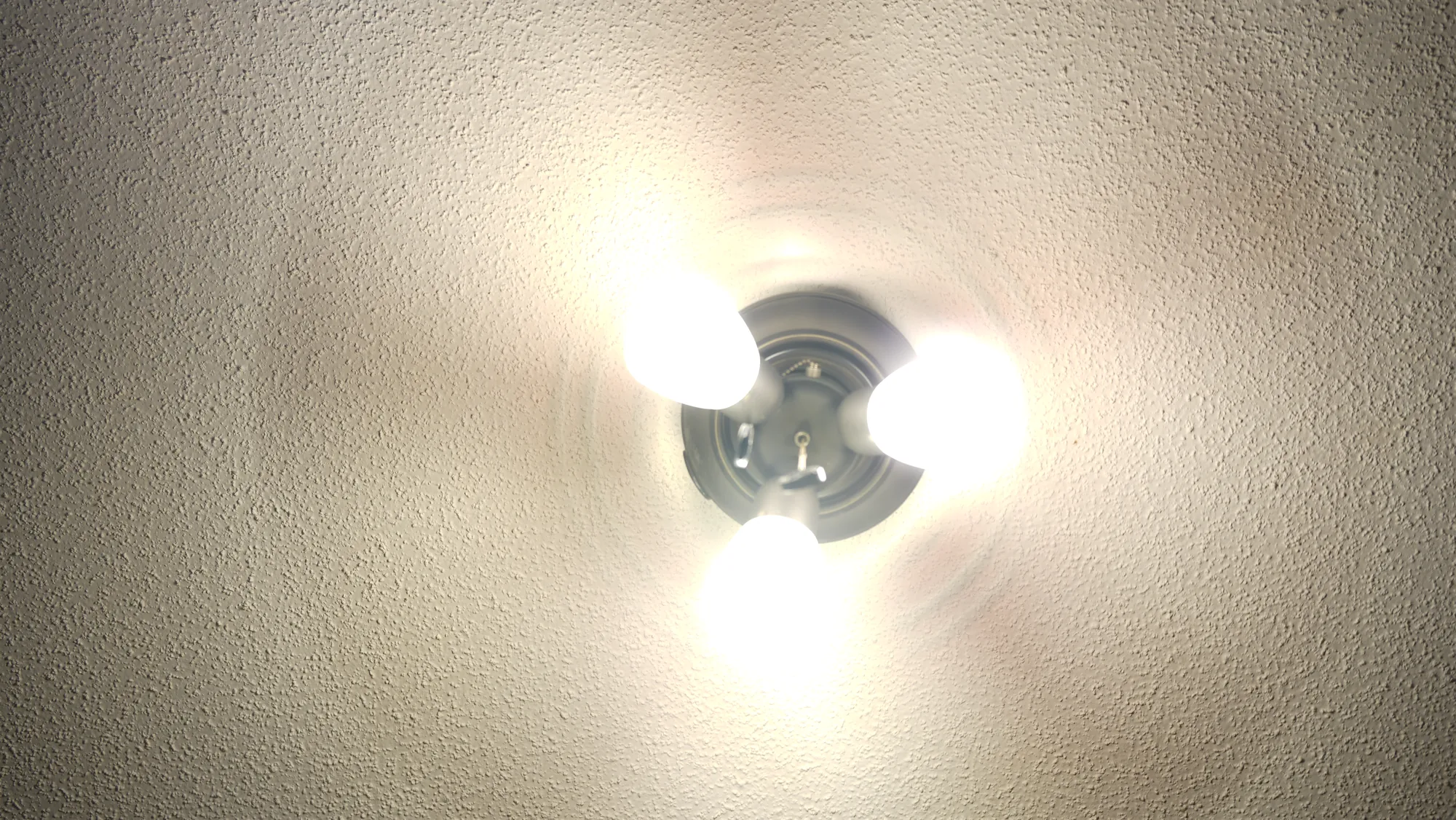
Slow shutter · motion blur
The blades disappear.
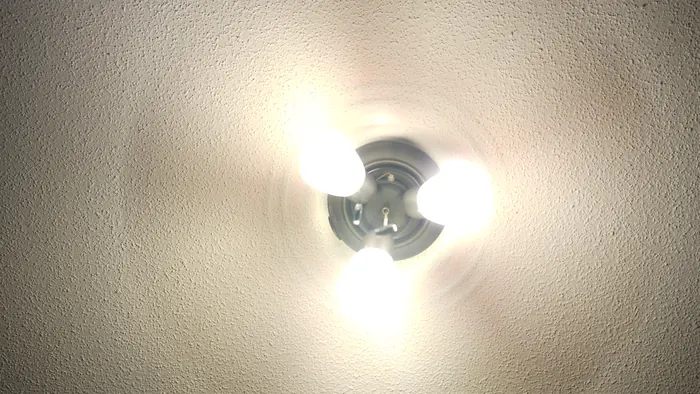
At a tenth of a second the fan blades turn into a translucent halo, while the fixed light housing and pull chain stay readable. To keep that long exposure from blowing out, ISO went to its floor.
Photography · Camera-control study
Four frames shot in one 35-minute evening, each pushing a single camera setting to an extreme, followed by two portrait sessions where those same controls do quieter work.
The idea
Shutter, aperture and ISO share one budget of light. Push one to an extreme and the other two have to pay for it. This set makes that trade visible, one setting at a time.
Slow shutters smear anything that moves; fast shutters freeze it. The cost is light: a fast shutter lets in very little.
A wide aperture isolates a subject against soft background; a narrow one keeps a whole scene sharp. Narrow also means darker.
When the other two take light away, ISO makes it back, and charges in grain. Where it lands tells you what the shot demanded.

Slow shutter · motion blur
At a tenth of a second the fan blades turn into a translucent halo, while the fixed light housing and pull chain stay readable. To keep that long exposure from blowing out, ISO went to its floor.

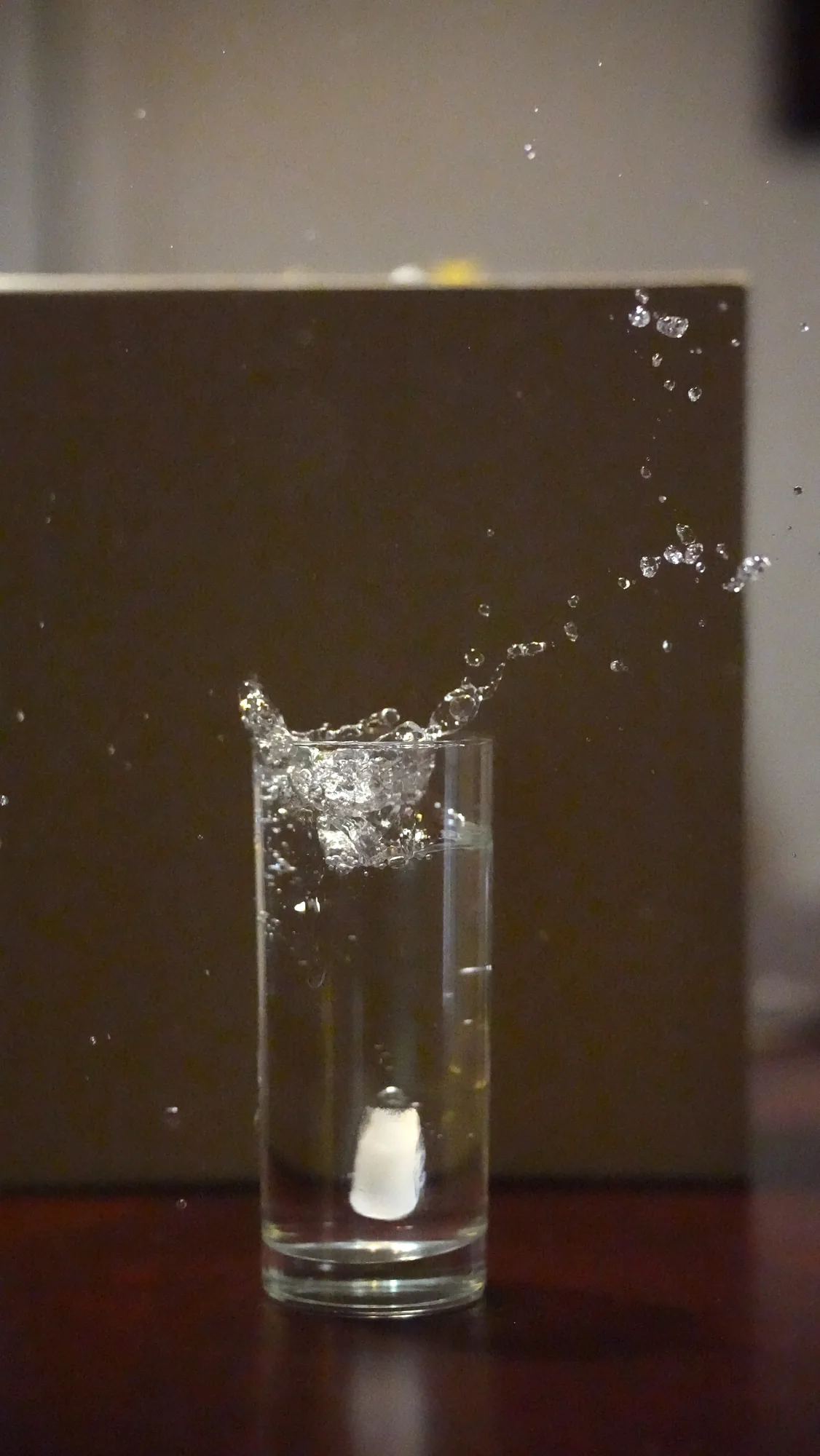
Fast shutter · frozen motion
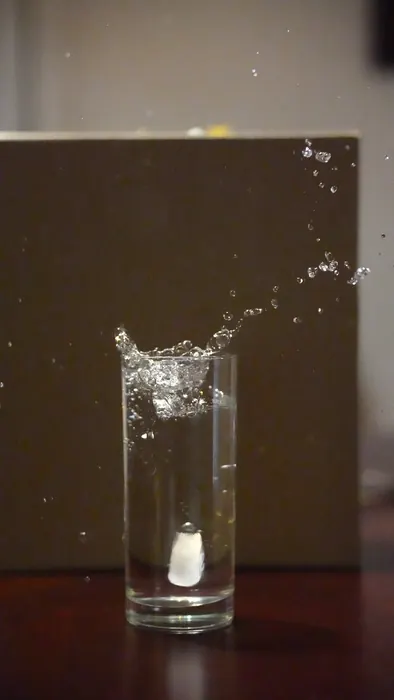
At 1/3200 s the splash from a dropped ice cube hangs above the rim, each drop a separate bead of light. The dark board behind the glass makes the water read. Freezing time indoors without flash pushed ISO to 51,200, the top of the scale, and the grain is the visible price.

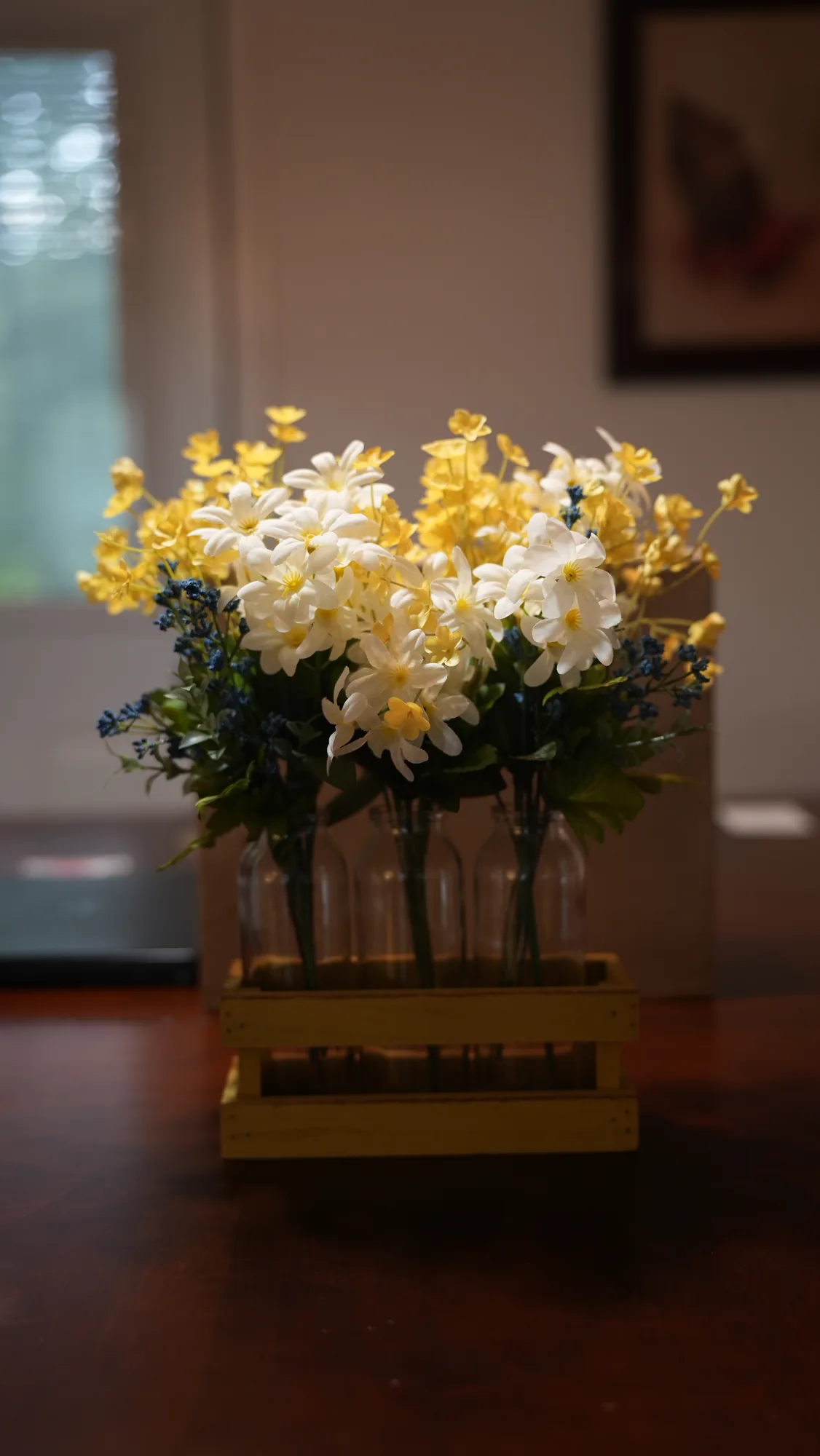
Wide aperture · shallow depth of field
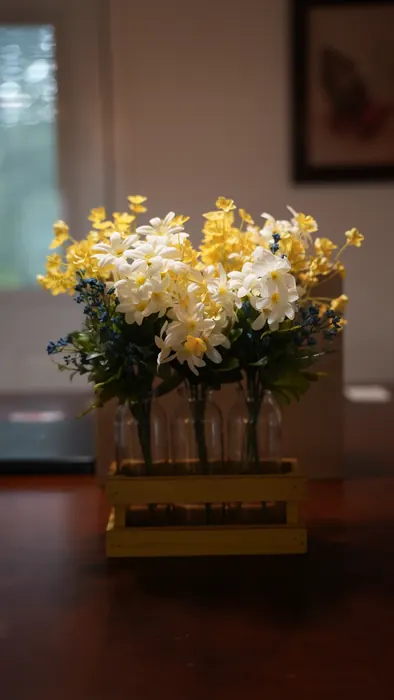
At f/2.2 only the front of the bouquet is crisp. The window turns into bokeh and the framed art on the wall becomes a shape rather than a picture, so the eye has nowhere to go but the flowers. Side light from the window gives the petals their shape.

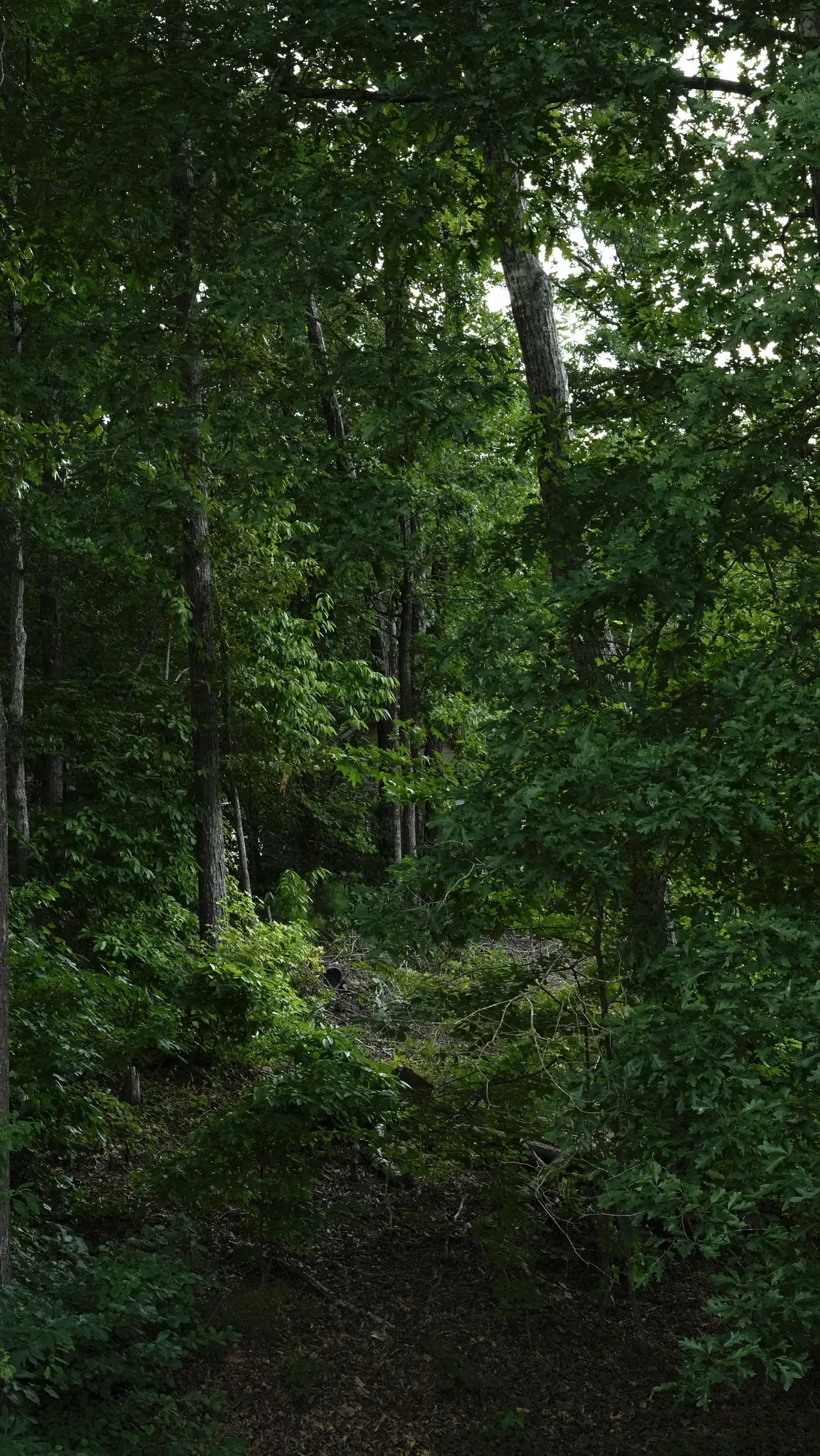
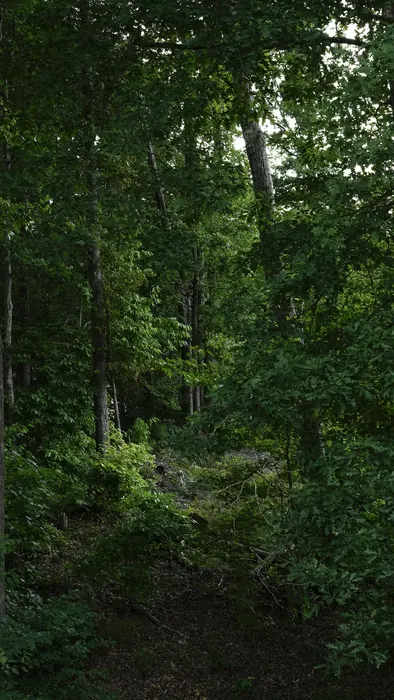
Narrow aperture · deep depth of field
Stopped down to f/8 on a 50mm prime, the frame holds detail from the leaves in front to the trunks deep in the woods. A faint trail pulls the eye inward. Dusk under a full canopy meant raising ISO to 2000 to keep a hand-holdable 1/100 s.
Applied
In portrait work no single setting should call attention to itself. These two frames from an in-home session use focal length and aperture to decide how much of the room belongs in the story.
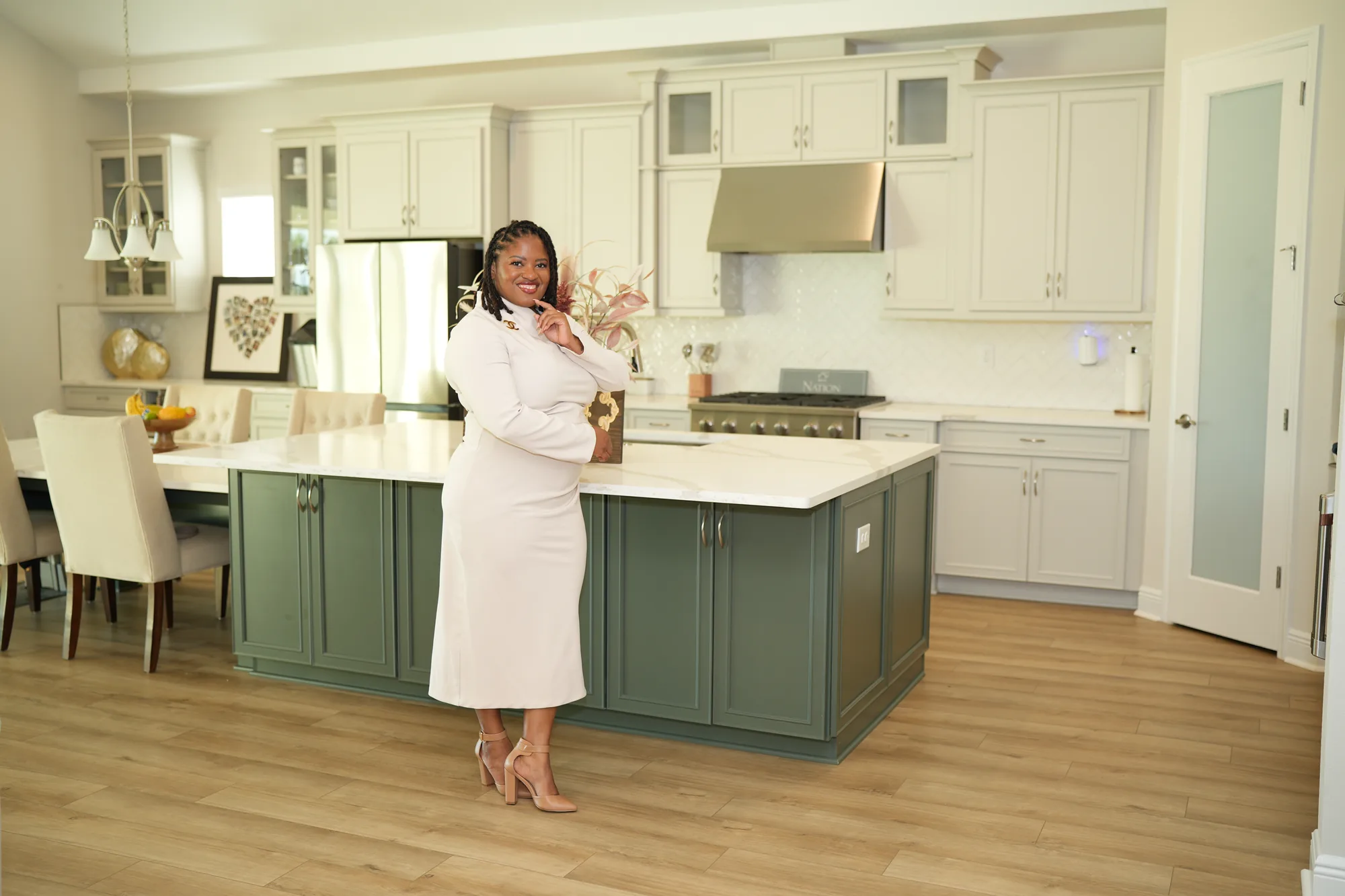
Environmental portrait · 35mm
At the wide end, the room is part of the portrait: green island, white cabinetry, pendant light. The subject sits off-center on a third, and the cream dress ties her to the palette of the space. f/2.2 keeps her sharpest while the kitchen stays recognizable.
Lifestyle portrait · 79mm
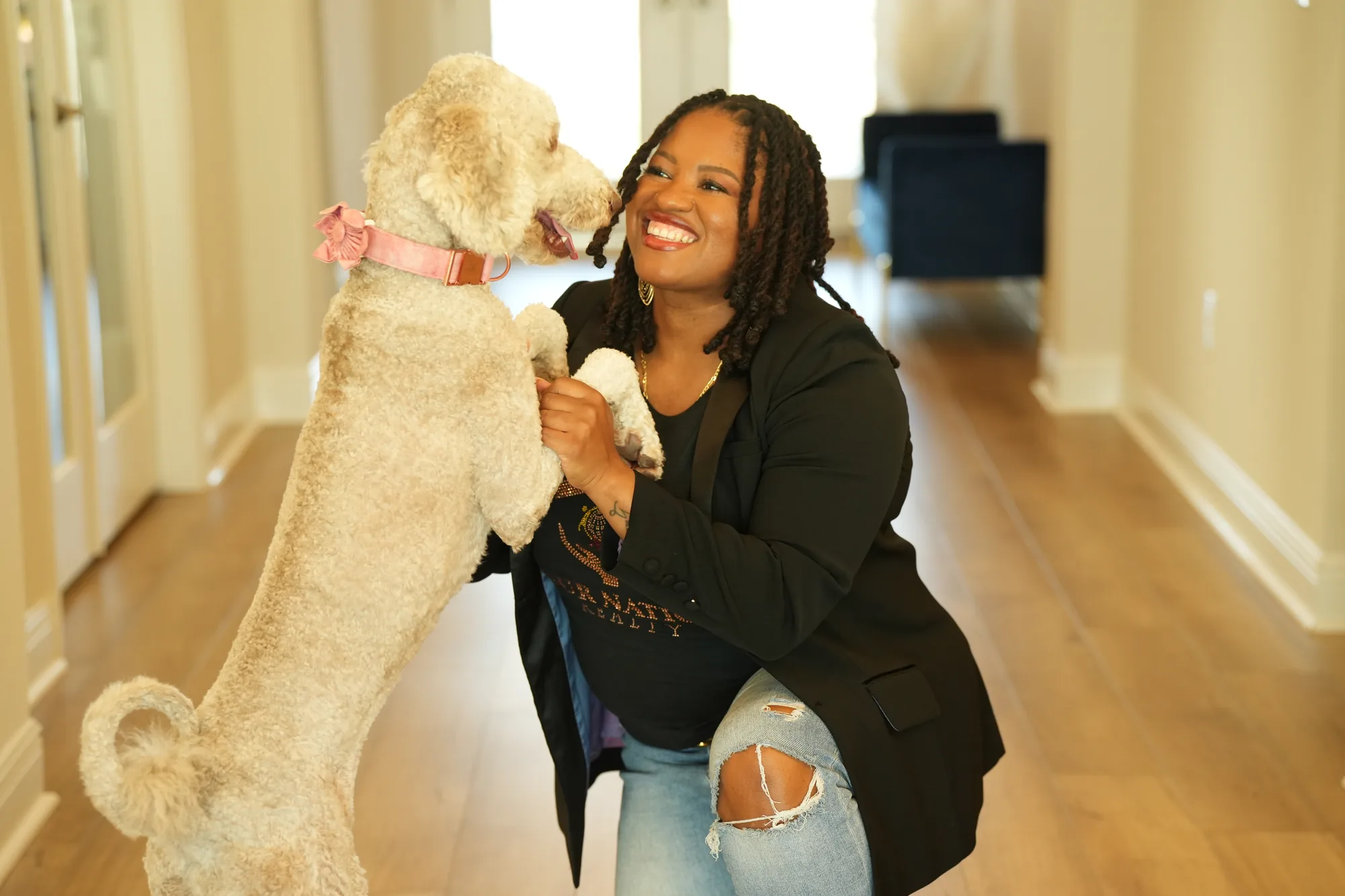
A longer focal length compresses the hallway and softens it, so the eye goes straight to the exchange between the two faces. 1/100 s was fast enough to catch an unposed moment without letting a moving dog blur.
What I'd push next
The metadata is honest about where each shot was stretched. Here is how I would reshoot three of them.
The bulbs clip to pure white. A neutral-density filter would allow the same slow shutter at a smaller exposure, keeping detail in the glass shades.
A speedlight's short burst does the freezing, so ISO could drop to a few hundred and the dark backdrop would stay clean.
Locked down, the same f/8 frame could run at ISO 100 and a longer shutter, lifting shadow detail under the canopy.